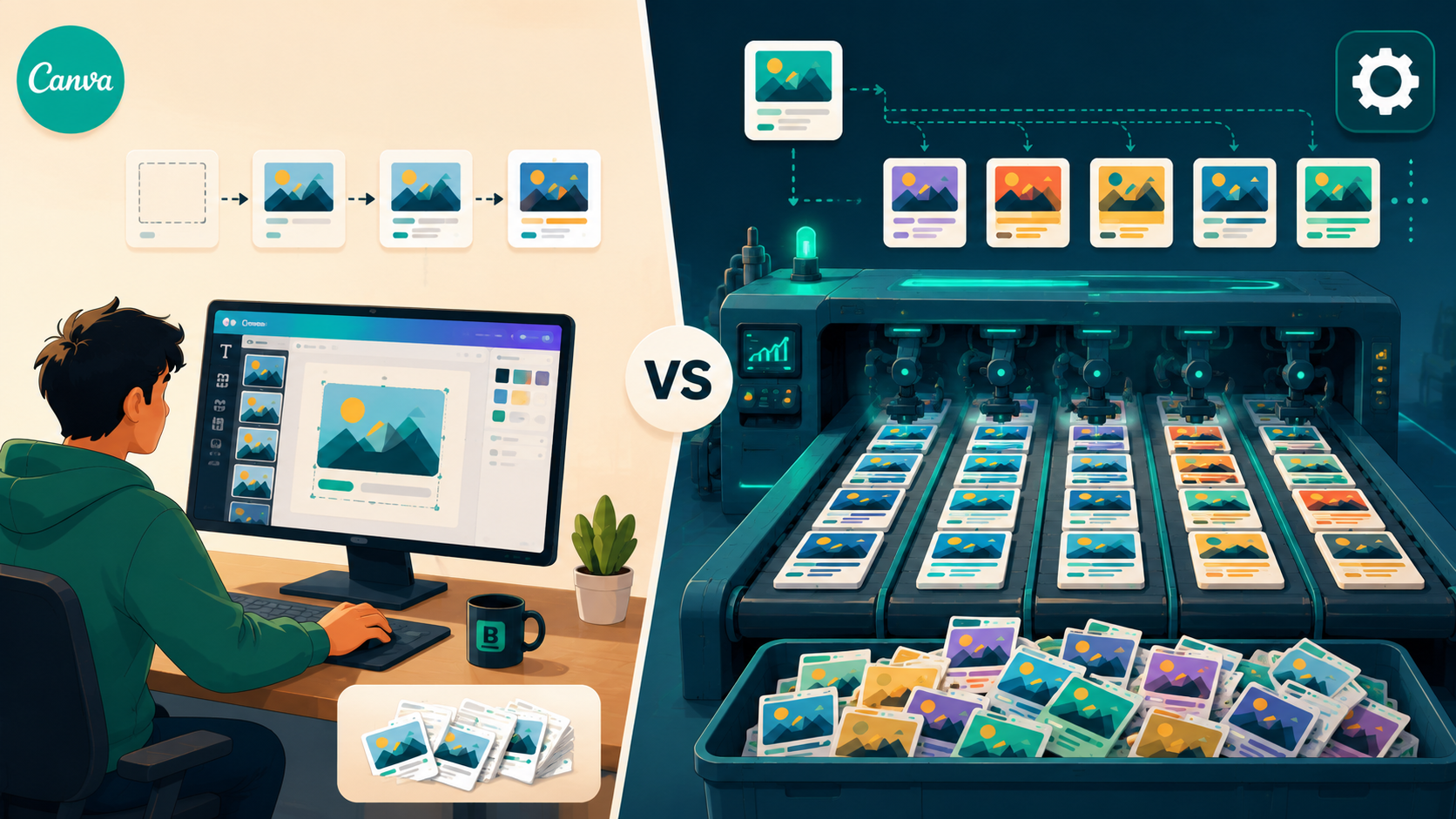
Most operators who calculate the cost of making creatives by hand stop at the wrong number. They look at design hours, freelancer invoices, or their own time, add it up, and conclude it's manageable. The number that doesn't show up in that calculation is the one that matters most.
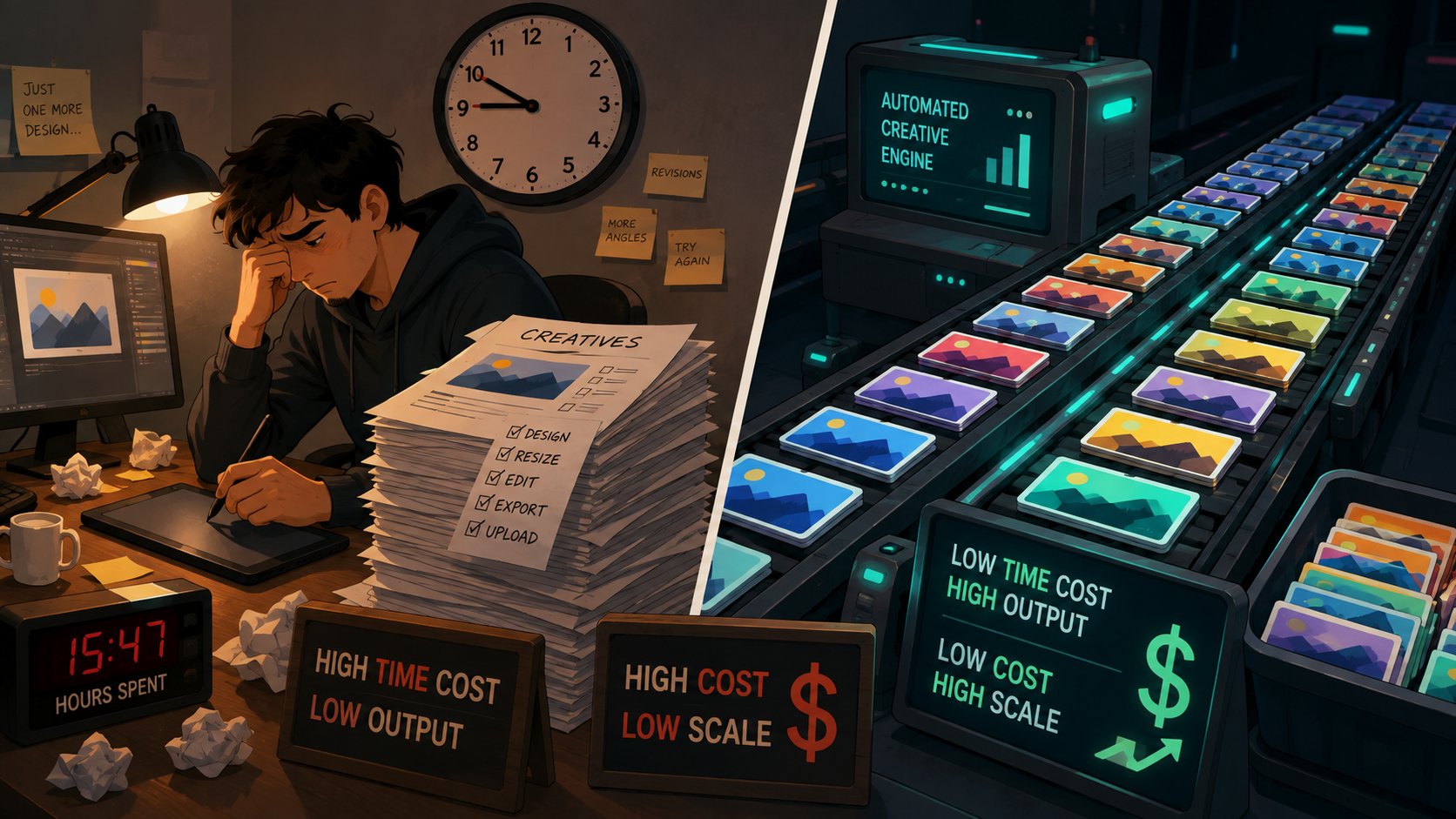
The visible cost
A competent designer working on RSOC-style ad creatives — brief, design, revision, export — takes somewhere between 45 minutes and two hours per finished creative, depending on complexity. At scale, operators often benchmark around 60 to 90 minutes average when you include the back-and-forth.
At a freelancer rate of $30–$50 per hour, a batch of 20 creatives runs between $900 and $1,500 in direct cost before you've learned anything from them. That number is uncomfortable but calculable. It shows up on invoices and feels like something you can optimize.
The invisible cost
Here's what doesn't show up on an invoice: every day that creative production takes is a day your testing window is open but empty.
Search arbitrage feeds saturate. When a keyword starts converting well, other buyers notice. CPCs climb. The quality of traffic shifts. The window where a given angle performs at margin is finite — sometimes weeks, sometimes days. You can't know in advance how long it is.
If your production cycle takes 72 hours from "I want to test this angle" to "ad is live," you've already given away a meaningful chunk of that window before collecting a single impression. If the creative then needs a revision before it performs, you've given away more. By the time you have a validated winner, you may have a fraction of the profitable window left to actually scale it.
This is the cost that doesn't appear on any spreadsheet. It shows up as campaigns that underperformed, angles that "didn't work" but were never actually tested in time, and keywords that looked promising but never converted at scale. The miner who tests fast gets more validated angles per window than the operator who tests carefully but slowly.
Why speed isn't just efficiency — it's the product
Testing velocity is the edge in RSOC. The operator with the highest reps per window wins more angles per keyword, compounds faster, and has more data informing each successive test. A slow creative pipeline doesn't just cost money — it systematically produces worse data by compressing the feedback loop.
This reframes what an automated creative tool actually is. It's not a way to cut design costs, though the per-unit math does favor it heavily. It's a way to decouple testing velocity from headcount. When you can go from keyword to live ad in under an hour — without a designer, a brief, or a revision cycle — the constraint on how many angles you test per week becomes strategy, not production capacity.
BulkCreative was built around that specific constraint. The operators who use it aren't primarily saving money on design. They're running more tests per window than their competitors can, and capturing the data those extra reps produce.
That's the cost of making creatives by hand. Not the invoice. The reps you never got.