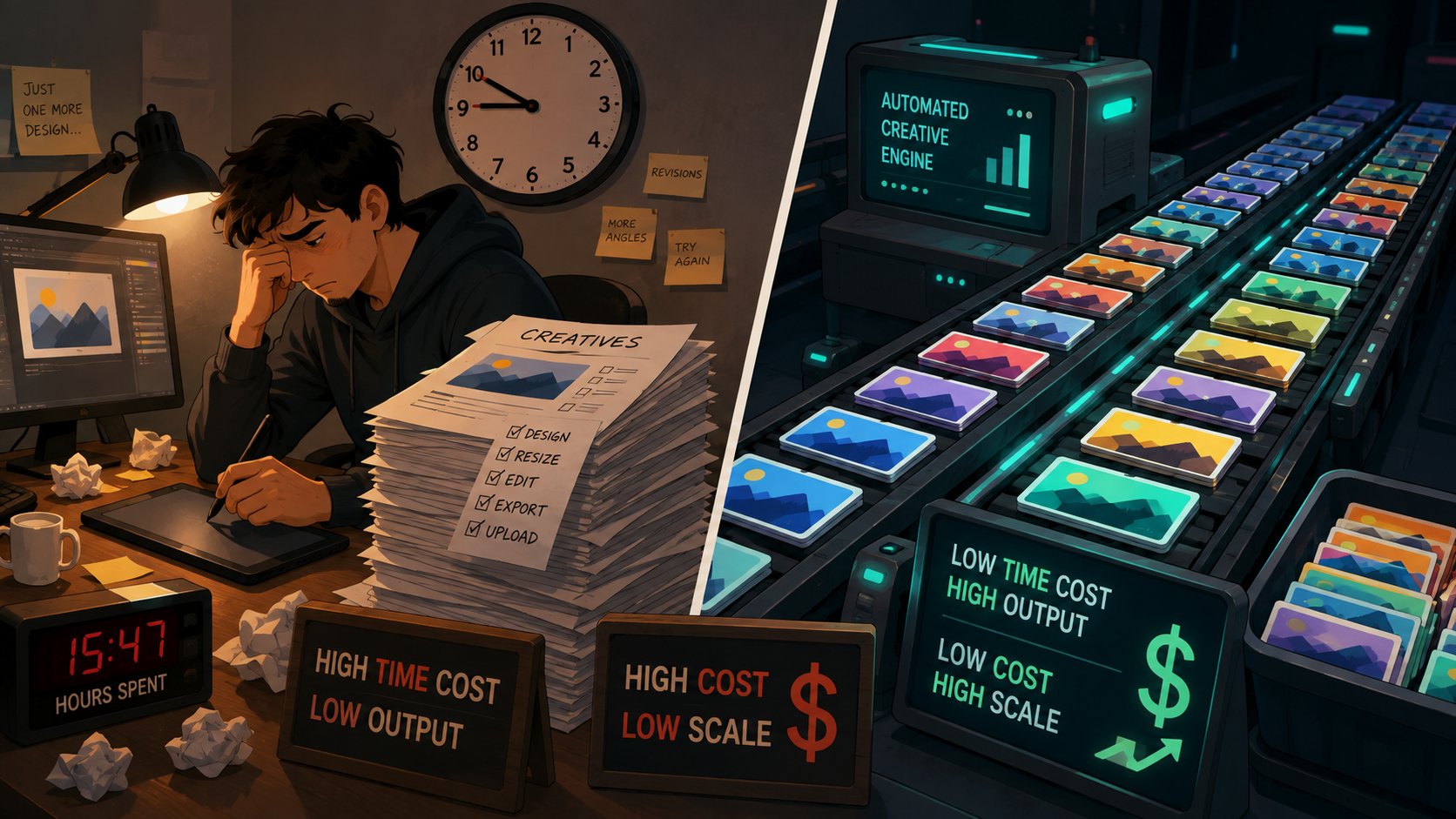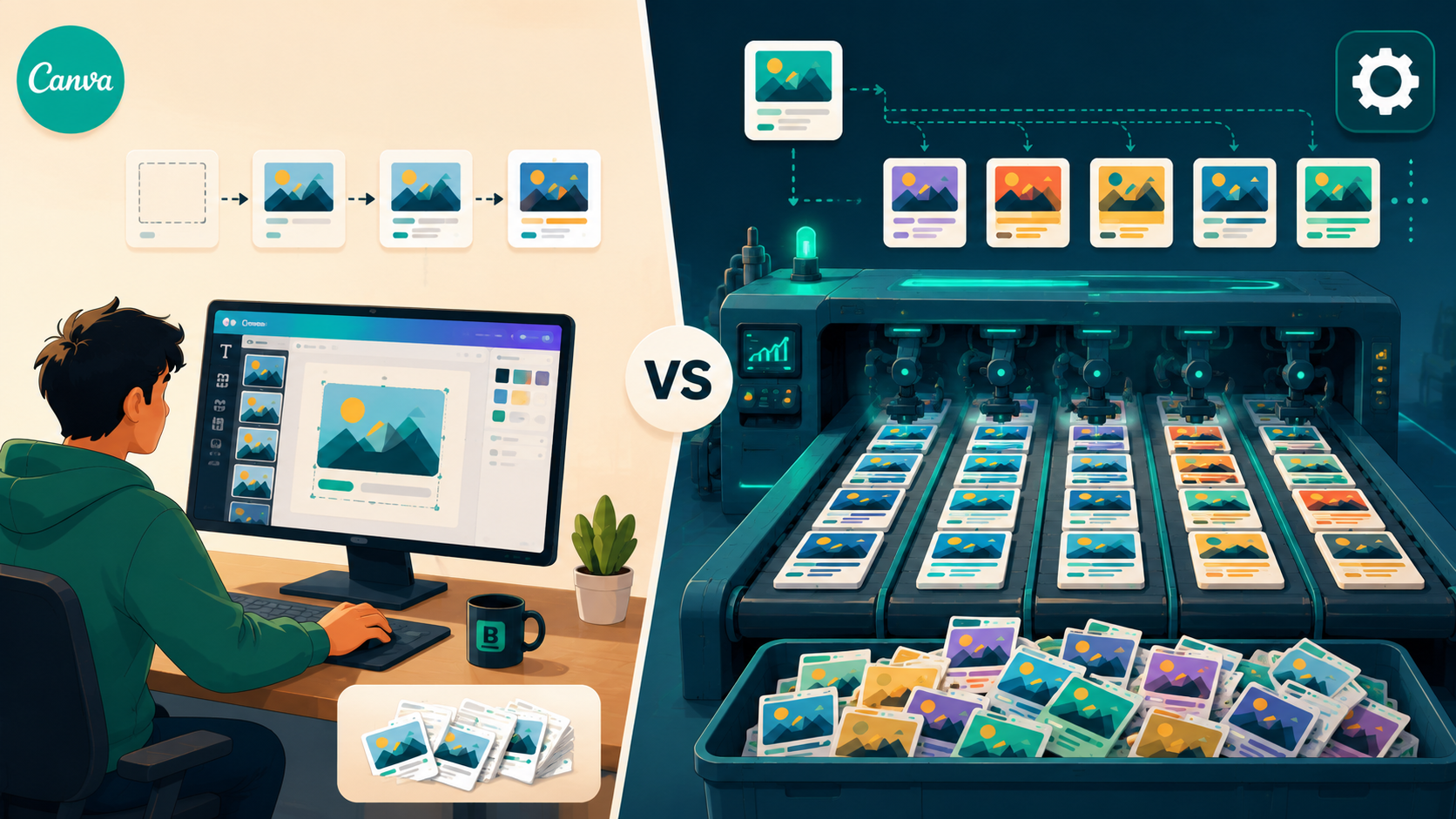
Most RSOC operators write one brief per keyword. The brief says something like: "car insurance, need clicks, make it compelling." The designer produces five variations of essentially the same execution. All of them lean on a direct claim — "Compare rates now," "Find the cheapest quote today" — because that's what "ad creative" looks like when you're not asking what state of mind the user is actually in.
That brief is fine for one context. It's a liability in the other. Understanding the difference is the thing that separates operators who scale cleanly from the ones who burn accounts and blame the platform.
Two audiences, two psychological states
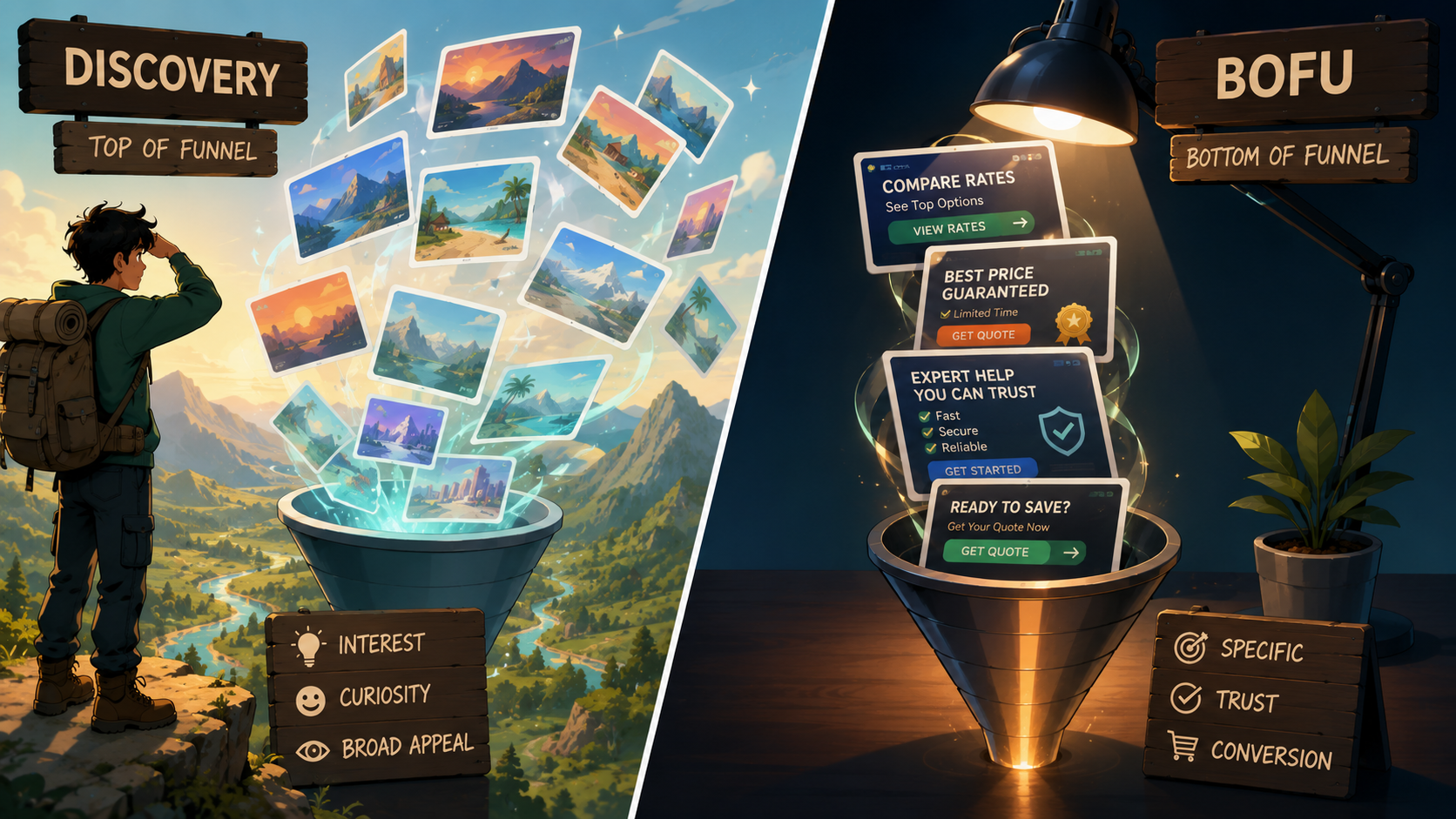
Discovery traffic and bottom-of-funnel traffic are not variations of the same audience. They're completely different psychological states, and they require completely different creative approaches.
A user seeing your ad on a discovery placement — Facebook, TikTok, native networks like Taboola or Outbrain — is in consumption mode. They're scrolling. They're not looking for anything specific. They have no active problem to solve, no quote they're trying to compare, no purchase they're about to make. Your ad is an interruption of something else they were doing.
A user in a BOFU context is already in motion. They searched something, clicked an article, landed on a page related to your keyword. They have an active consideration happening. They're receptive to directional information, comparisons, specific outcomes. The gap between where they are and where you want them to go is much smaller.
Same keyword. Completely different person at the moment they see your ad.
Why using the same creative in both places burns you
When you run BOFU-style copy — direct, outcome-focused, "click here to compare" — on a discovery placement, two things break:
Platform quality suffers. Discovery platforms score your creative based on user behavior before and after the click. When cold traffic sees an aggressive, transactional headline, a portion of the clicks come from people who felt pressured rather than curious. Their post-click behavior is worse — they bounce faster, engage less, signal to the platform that your ad wasn't a good match for the moment. The platform interprets this as low quality. CPCs creep up. Delivery gets deprioritized. Over time, the account health degrades in ways that feel mysterious because the ads "technically" got clicks.
RPM drops on the publisher side. Search arbitrage works because you match user intent to a monetized SERP. But intent is something users have to arrive with — you can't inject it at the point of the click. A cold-traffic user who was promised something interesting and arrived at a page full of sponsored links they weren't mentally ready for will not click those links. They'll bounce. Your RPM for that traffic source will be structurally lower than the same keyword's RPM from a higher-intent source, and no optimization to the landing page will fix it because the mismatch happened upstream.
What the right creative brief looks like by stage
For discovery placements, the creative's job is not conversion. It's curiosity. The user doesn't have a problem yet — your creative has to surface a problem, or a question, or a gap in what they know, in a way that makes them want to know more. "Did you know most people overpay for X without realizing it?" works here. "Compare X now and save" doesn't, because it assumes intent the user doesn't have.
Think about who you're actually interrupting. Someone scrolling their feed at 9pm isn't looking for a quote. They might be genuinely interested in whether they're overpaying — but you have to frame it in a way that respects where they are, not where you want them to be. The creative earns the click by being relevant to their current state, not by pressing urgency they don't feel.
For BOFU placements, the creative can be more direct because the user's state supports it. They've searched something, clicked something, shown an active interest signal. Meeting them with a specific, outcome-oriented claim is appropriate here — it matches the consideration they're already in the middle of. "Here's how to compare rates before your renewal" lands differently on someone who just searched for insurance than on someone who was watching a video about something else entirely.
The brief is where this breaks
Most operators don't separate their creative briefs by funnel stage because they think of creatives as assets, not as communications to a specific person in a specific moment. The output ends up optimized for one context — usually BOFU, because that's the default shape of a "good ad" — and deployed across both.
Testing faster doesn't help you if every test is the wrong type of creative for the placement. You can generate a hundred variations of a BOFU creative and none of them will fix the structural mismatch on a discovery placement. The variable you need to change is the brief, not the execution.
The fix is simple in principle: write two briefs per keyword, one per context. Force the question — "What is this person doing right now, and why would they care?" — before any design work starts. The miner's approach applies here too: you're not just iterating on executions, you're tracking which stage of intent each creative is built for, so your data actually tells you something.
The payoff
When discovery and BOFU creatives are properly separated, the funnel starts to compound in both directions. Discovery creatives that don't over-promise produce better post-click behavior, which improves quality scores, which lowers CPCs over time. BOFU creatives that match the user's actual consideration state convert at higher RPM because the user arrived prepared. The per-creative cost of production is the same — but the return on each creative is structurally higher because it's designed for the moment it will be seen.
Account health improves not because you fixed a technical setting, but because you stopped asking the wrong creative to do a job it was never built for.