"Search arbitrage jobs" gets searched by two very different people: someone trying to break into the industry, and someone trying to hire for it. They're looking for the same thing from opposite directions, and what they both find online is usually not very useful.
Here's a clearer picture of what this work actually involves.
What the job is
Search arbitrage is a media buying discipline. You buy traffic — from Meta, TikTok, display networks — and send it to landing pages monetized through search feeds. The margin is the difference between what you paid for the click and what the feed paid you for it.
The work is fundamentally analytical. You read campaign data, adjust bids, test new keywords, and make decisions about where to allocate budget. A good day is finding a combination that converts and pushing it before it saturates. A bad day is burning budget on things that don't.
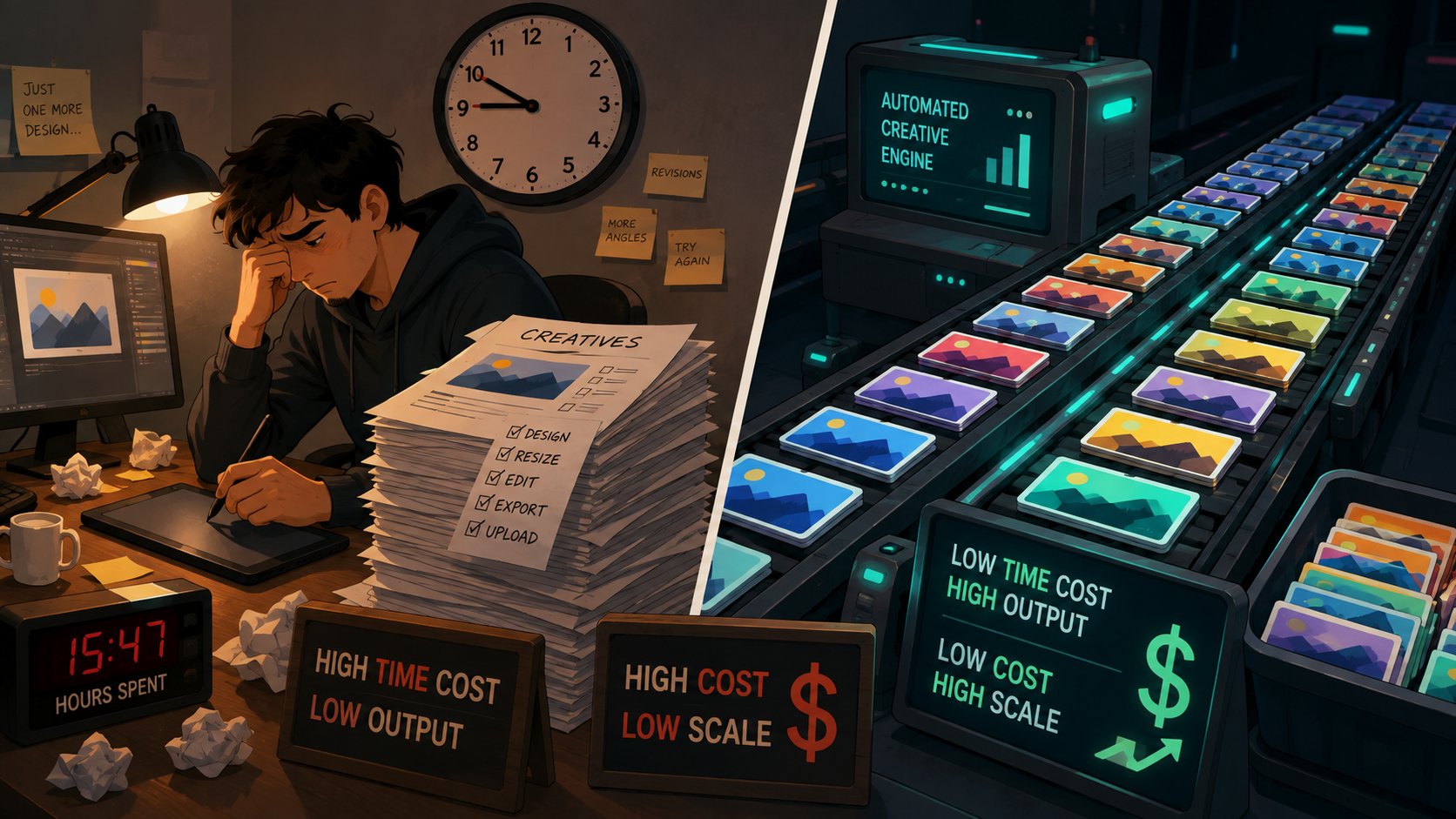
The creative side — what most people don't hear about in job descriptions — is constant. Every keyword needs ads. Every new angle needs assets. The people who treat creative production as secondary to the media buying tend to become the bottleneck for their own campaigns.
What companies are actually hiring for
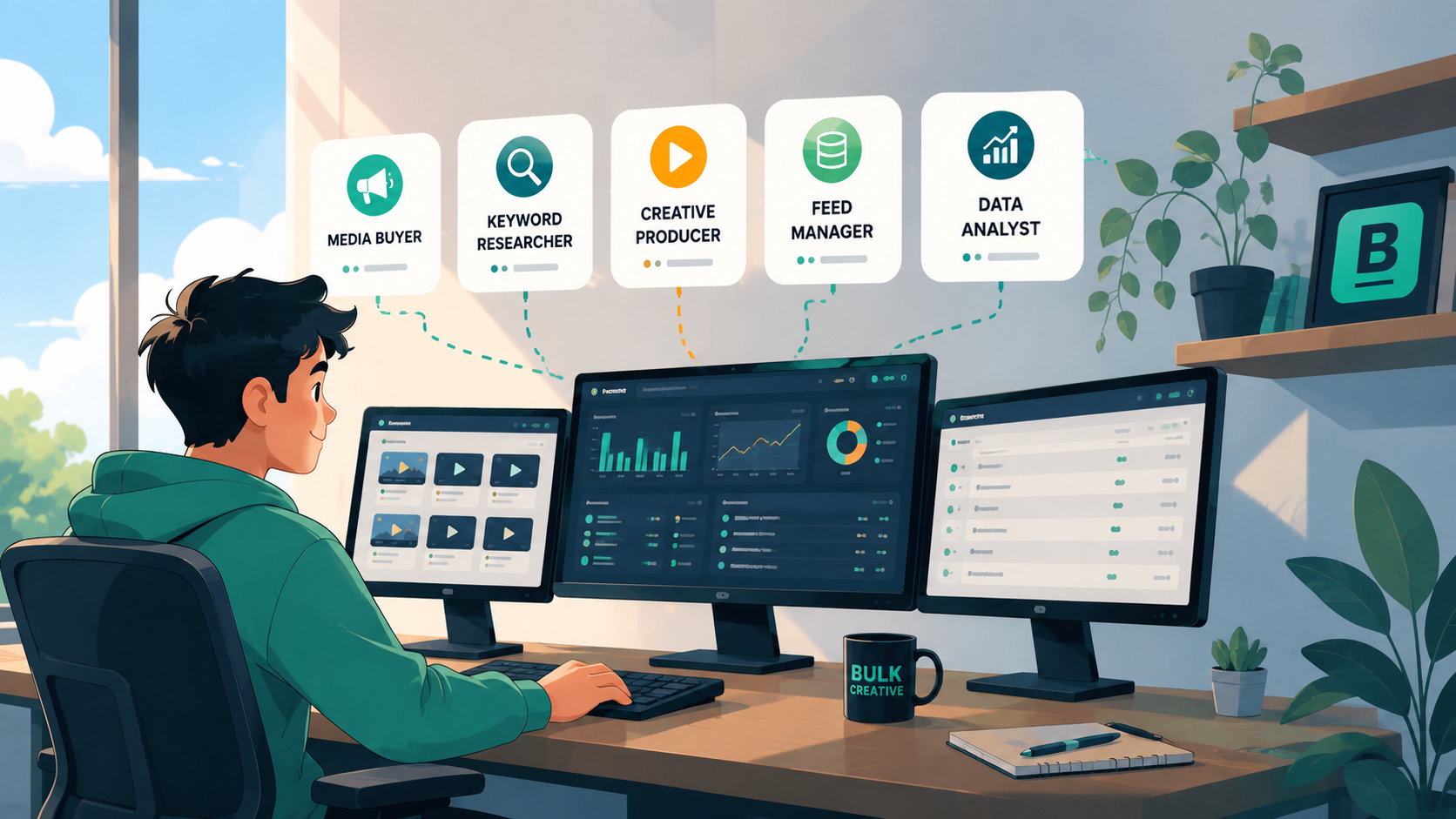
Most teams running search arbitrage at scale need some combination of:
- Media buyers who understand feed-based monetization, not just platform optimization
- Someone tracking compliance — clawbacks are real and expensive
- Someone handling creative output fast enough to feed the testing volume the media buyer needs
That last role is more important than most job listings admit. Testing enough creatives per keyword is what separates teams that learn quickly from teams that guess. When production is the bottleneck, everyone upstream suffers.
Where tooling changes the team shape
A capable media buyer with the right tools can cover ground that would traditionally require a larger team. The leverage point is creative production: when generating a batch of ad images takes two minutes instead of two days, the same person can run more tests, kill losers faster, and act on research without waiting for assets.
This changes the math on hiring. A solo operator or small team that's automated creative production can compete on testing velocity with a team twice its size that hasn't. The edge isn't headcount — it's cycle time.
For someone trying to break into the industry: understanding creative production and being fast at it is a real differentiator. The media buyers who struggle tend to be the ones who never figured out a scalable creative workflow.
The honest version
Search arbitrage jobs are less glamorous than the margin numbers sometimes suggest. The work is repetitive data analysis with occasional spikes of insight. The creative side is relentless — the feed never stops needing new angles to test.
But for the right kind of operator, that loop — test, read signal, adjust, repeat — is exactly the job. If you want a discretionary media buying role with room for research and fast iteration, it's a hard model to beat.