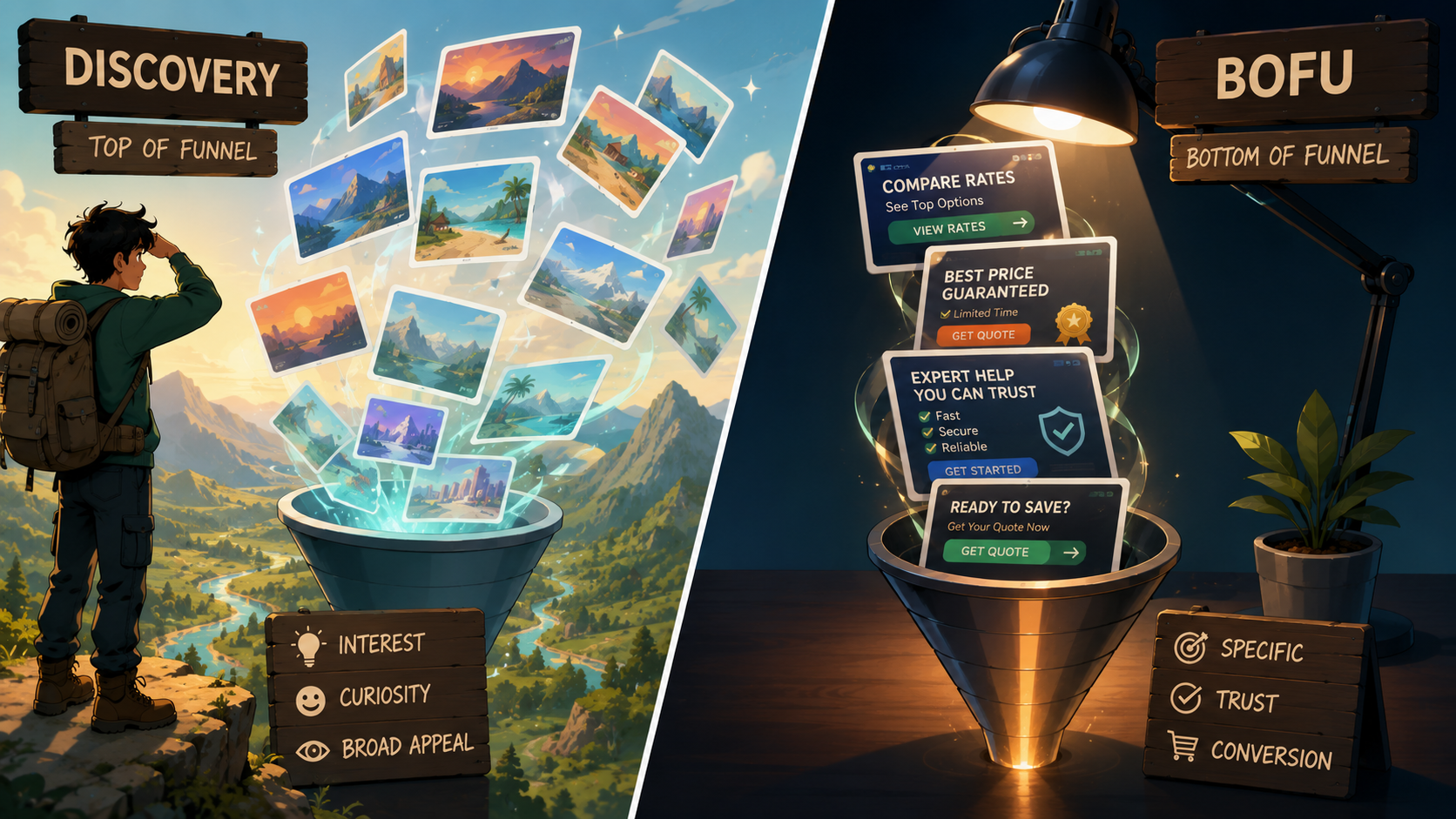
RSOC search arbitrage is the practice of buying web traffic cheap, sending it to a content page with Google's Related Search on Content (RSOC) ad units, and earning more from the resulting ad clicks than the traffic cost. It replaced the old AdSense for Domains (AFD) parking model, which Google shut down on February 10, 2026. Here's the no-fluff breakdown.
First, what does "arbitrage" even mean?
Arbitrage is a fancy word for something you already get: buy low, sell high.
It's what the guy flipping sneakers does. Buys at 100, sells at 150, keeps the 50. He didn't invent anything, he just worked a price gap.
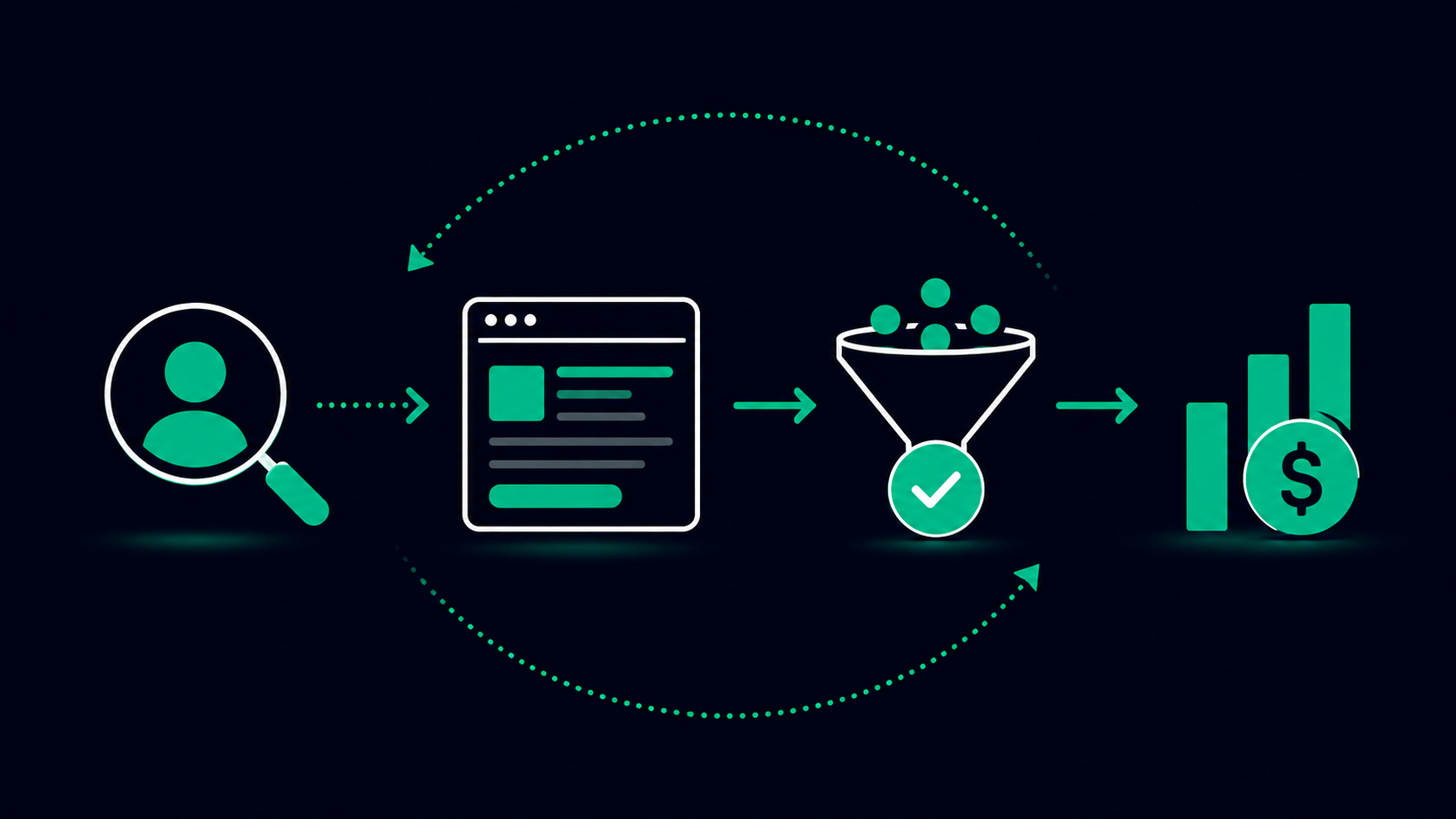
Search arbitrage runs the same play, but with internet traffic instead of sneakers. You buy visits to your page cheap (on Meta, TikTok, native ads) and monetize them with ads that pay more than what the traffic cost you. The gap is your profit. The only real question: where does the money on the other side come from? That's where RSOC kicks in.
So what is RSOC?
RSOC stands for Related Search on Content. It's a Google tool.
In plain terms: it's a block of "related searches" that shows up inside an article. You're reading a post about "SUVs to avoid," and right under the intro you get suggestions like "cheap SUVs 2026" or "used truck deals." You click one, and it sends you to a results page full of ads.
Every time a user makes that click, Google charges the advertiser and splits the pot. According to AdsCollab, the publisher keeps 51% of what Google collects on that click. That 51% is your "sell high." The traffic you bought to get people into the article is your "buy low." Deal closed.
How the full loop works
- Build a site with real content. Actual articles on things people search for.
- Get an RSOC feed. Through Google directly, or (more common when starting) a feed provider like System1, Sedo, or Tonic.
- Drop the RSOC block into your articles.
- Buy traffic and send it to the article. Meta, TikTok, or native ads (Taboola, Outbrain).
- User reads, clicks a related search, hits the ads. That's your revenue.
- Measure and optimize. Earn more than you spent? Scale. If not, kill it.
The golden rule never changes: the day your traffic costs more than you monetize it, you don't have a business, you have an expensive hobby.
The elephant in the room: what happened to AFD?
Search around this topic and you'll hit two acronyms fighting: AFD vs RSOC.
AFD (AdSense for Domains) was the old school. Domain parking: you'd buy a keyword domain, slap zero real content on it, and Google would fill the empty page with ads. That model was a magnet for junk, so Google pulled the plug.
Here's the part that changes everything if you're new in 2026: AFD officially shut down on February 10, 2026, according to Domain Name Wire. Not declining, dead. Per AdsCollab, Google's policy changes first caused a 60% revenue drop, then auto-opting advertisers out of parked pages triggered a 95% collapse. If someone's still teaching you "domain parking" today, they're selling a map of a country that no longer exists.
The fine print nobody mentions
Compliance is the biggest risk now. AdsCollab notes that Google runs a strike system where a single non-compliant page can put your whole account at risk. So the aggressive "MAKE $5K A DAY" creatives are done — per AdPlexity, today's winners are more vanilla and restrained. And where's the money? AdPlexity's data shows cars and travel leading spend, especially in the US, followed by home services.
RSOC isn't a get-rich-quick scheme. It's a real business with real margins, but it doesn't forgive sloppiness anymore. Come in with "buy cheap, sell high, protect quality," and you've got a game worth learning.
Frequently asked questions
Is RSOC search arbitrage legal? Yes. It's a legitimate business model that Google actively supports through its AdSense for Search ecosystem. The catch is compliance: you have to follow Google's content and traffic-quality rules, and incentivized or misleading traffic can get your account banned.
How is RSOC different from AFD? AFD (AdSense for Domains) monetized empty parked domains with no real content. RSOC (Related Search on Content) requires genuine content pages and places related-search ad units inside articles. AFD was shut down on February 10, 2026; RSOC is now the dominant model.
How much does the publisher earn per click? Per AdsCollab, the publisher keeps 51% of the revenue Google collects on each sponsored search click.
What traffic sources work for RSOC? The most common paid sources are Meta, TikTok, and native ad networks like Taboola and Outbrain. Traffic must generate genuine engagement; incentivized clicks are prohibited.
Which verticals make the most money in RSOC? According to AdPlexity, cars and travel lead ad spend (especially in the US), followed by home services and broad curiosity topics.