Most operators treat a winning creative as an English-only asset. That's leaving money on the table. The same creative that works can reach entirely different audiences the moment you speak their language, and in RSOC, that's a lever almost nobody pulls properly. Here's why "not everything is in English" is the opportunity, not the obstacle.

The English tunnel vision
Walk into any search arbitrage community and you'll notice something: everyone's fighting over the same English-speaking traffic. Same geos, same auctions, same rising costs. It's the most crowded room in the building.
Meanwhile, huge audiences in Spanish, Portuguese, German, French and beyond are underserved, not because the advertiser money isn't there, but because producing localized creatives felt like too much work. So most operators never bother. The crowd stays in the English room, and the other doors go untouched.
A winning creative isn't a single-language asset
Here's the reframe. When you find a creative that works, you haven't found "an English creative that works." You've found an angle that works, a hook, a framing, a promise that resonates. The language is just the wrapper it happened to ship in.
That same angle, spoken in Portuguese to a Brazilian audience or in Spanish to a Mexican one, is a brand-new shot at a brand-new market, built on something you've already validated. You're not gambling on a fresh idea. You're translating a proven one into rooms nobody else walked into.
Why localization beats translation
One caveat, because this is where people cut corners. Reaching a new-language audience isn't about running your English creative through a translator and calling it done.
A real localized creative respects the tone, the phrasing, and the cultural register of the audience. A claim that lands in US English can feel off, or flatly wrong, when translated word-for-word into Spanish. The framing has to feel native, not imported. That's the difference between traffic that engages and traffic that bounces, and it's exactly the nuance that made localization "too hard" for most operators to attempt at scale.
What BulkCreative makes possible
This is the bottleneck BulkCreative removes. It generates creatives across multiple languages today, so the same validated angle can be produced natively for different audiences without rebuilding from scratch each time.
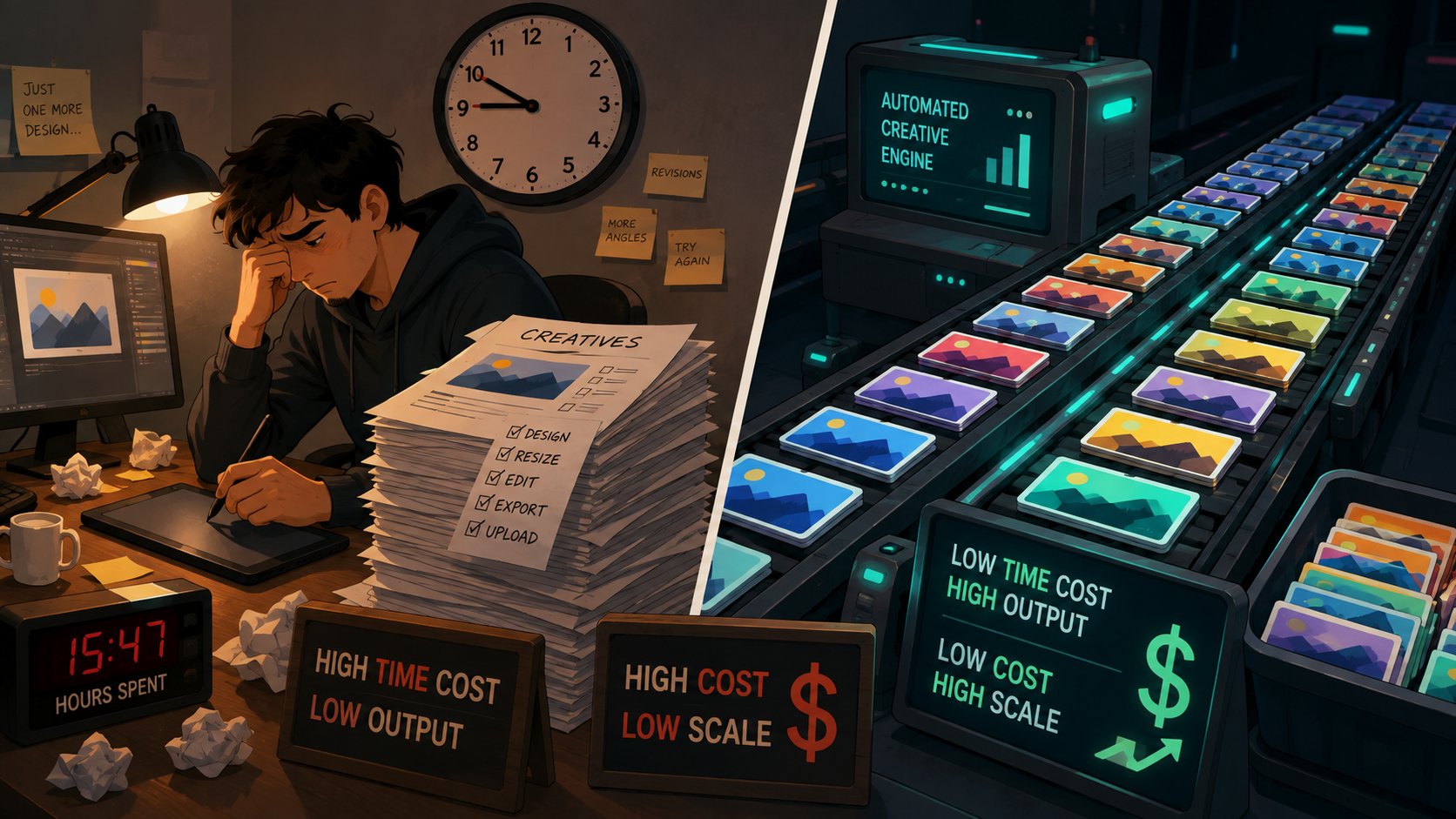
That changes the economics of going multi-language. Instead of one creative for one market, you take a proven concept and fan it out across several language audiences at once, each one framed to feel native rather than translated. The work that used to gatekeep multi-language expansion, producing all those localized variants by hand, stops being the reason you don't do it.
The takeaway
The most crowded market in RSOC is the English one, and it's crowded precisely because everyone assumes that's where the game is played. It isn't. A winning angle is language-agnostic; only the wrapper changes. Once producing native creatives in multiple languages is cheap and fast, "not everything is in English" stops being a limitation and becomes one of the least contested edges you can build.